Choosing the right early childhood program is about more than academics—it’s about finding a place where children feel safe, confident, and excited to learn. The early years of life play a critical role in shaping a child’s cognitive, emotional, and social development.
That is why play-based learning is such a powerful approach to early childhood education. It supports the natural way young children learn while building the foundational skills they need for preschool, Pre-K, and beyond.
Play-based learning is an educational approach that uses guided play as the primary method of instruction. Instead of relying on worksheets or memorization, children learn through hands-on activities that encourage exploration, creativity, and problem-solving.
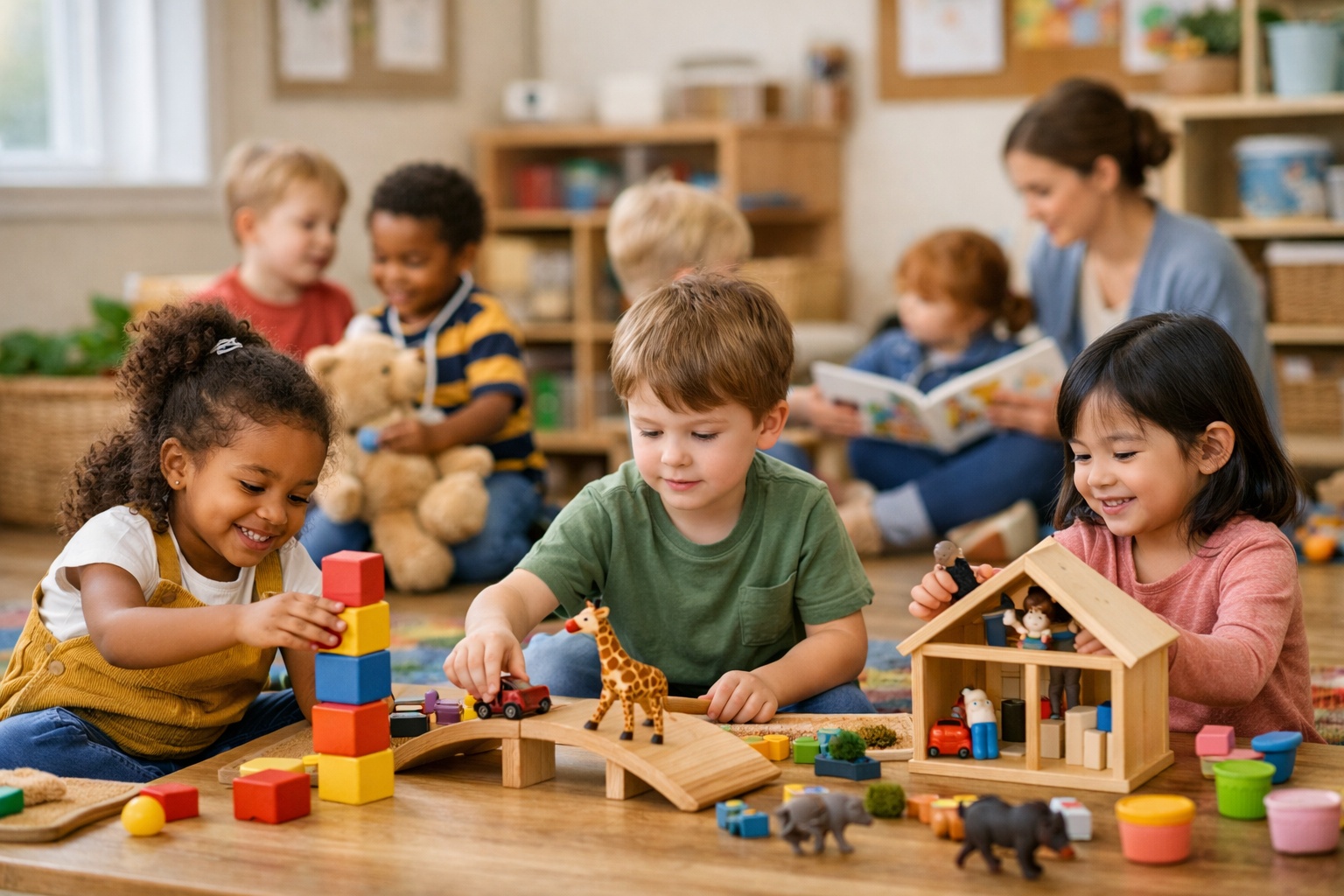
In a play-based classroom, children may:
Build with blocks to develop early math and spatial skills
Engage in pretend play to strengthen language and social development
Participate in sensory activities that support focus and fine motor control
Work together in group play to learn cooperation and communication
This approach allows learning to happen naturally and joyfully, especially during the most important developmental years.
During early childhood, the brain develops rapidly. Children learn best when they are actively involved and emotionally engaged. Play-based learning supports this growth by encouraging curiosity, repetition, and discovery.
Through play-based learning, children develop:
Stronger memory and attention skills
Early problem-solving abilities
Improved emotional regulation
A positive relationship with learning
Because children are engaged and motivated, learning becomes deeper and more meaningful.
One of the most important benefits of play-based learning is its impact on social and emotional development.
In a structured play environment, children learn how to:
Share and take turns
Express feelings appropriately
Build friendships and empathy
Develop independence and confidence
These skills are essential for success in preschool, kindergarten, and everyday life.
Play-based learning supports academic readiness without placing unnecessary pressure on young children.
Children naturally develop:
Language and literacy skills through storytelling, conversations, and early reading
Math readiness through counting, sorting, and pattern recognition
Science understanding through cause-and-effect exploration
Fine and gross motor skills through hands-on activities and movement
This balanced approach prepares children academically while respecting their developmental stage.
Children who experience high-quality play-based learning often transition more smoothly into kindergarten. They are more likely to demonstrate:
Better focus and classroom behavior
Strong communication skills
Confidence in trying new tasks
A love for learning
Play-based learning builds the foundation children need—not just for school, but for lifelong success.
At The Clifton School in Carrollton, TX, play-based learning is intentionally designed into each day. The environment supports curiosity, independence, and age-appropriate learning for children from infancy through early childhood.
Educators carefully guide play experiences to ensure each child develops socially, emotionally, and academically—at their own pace.
The Clifton School proudly serves families in Carrollton and nearby communities by offering a nurturing, play-based early childhood program in a safe and welcoming environment.
The best way to experience play-based learning is to see it in action.
Schedule a tour of our Carrollton location to:
Explore our classrooms
Meet our educators
Learn how play-based learning supports your child’s growth